Porcelain & cast-iron tubs · Berkeley, CA

Porcelain & Cast-Iron Tub Refinishing in Berkeley, CA

Rusted, chipped or dated enamel tubs across Berkeley reglazed to a factory-smooth gloss in a day — without pulling the tub out. Fully licensed & insured.

Hours: Mon–Fri 8 AM–5:30 PM, Sat 9 AM–4 PM

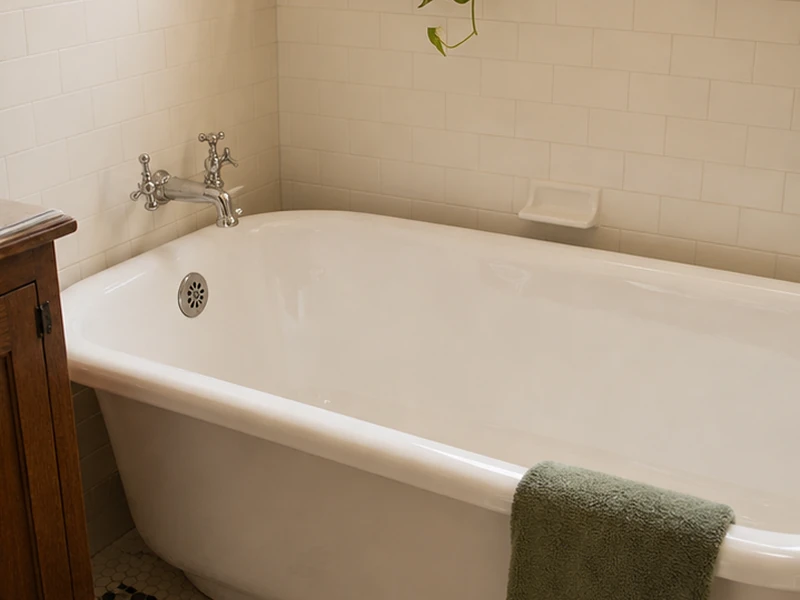
Refinished glossy white cast-iron bathtub in an Elmwood Craftsman home

Direct answer

Who refinishes porcelain and cast-iron tubs in Berkeley?

Berkeley Tub Reglazing Studio reglazes porcelain-enamel, cast-iron and pressed-steel bathtubs throughout Berkeley, CA, including rusted and chipped vintage tubs. Call (510) 746-8748, Mon–Fri 8 AM–5:30 PM, Sat 9 AM–4 PM, for a free quote.

What does it cost to reglaze a porcelain tub in Berkeley?

In Berkeley, reglazing a porcelain or cast-iron tub runs $739–$895 — roughly 50–75% less than replacement. Final price depends on the tub's size and how much rust and chip repair the enamel needs before priming.

Can you restore a chipped cast-iron tub?

Yes. Porcelain enamel over cast iron or steel is acid-etched so a bonding primer grips, then sprayed with several coats of acrylic-urethane. The result is a factory-smooth surface that lasts 10–15 years, all done in place without pulling out a 300-pound tub. To keep the cast iron you already own, reserve your Berkeley cast-iron tub reglaze online for a firm quote.

Berkeley's enamel tubs and how they wear

Most pre-war Berkeley homes were built with porcelain-enamel-over-cast-iron tubs — heavy, dense fixtures with a glassy baked-on glaze. You will find them in the Craftsman bungalows of Elmwood and Le Conte, the brown-shingle houses of North Berkeley and the Berkeley Hills, and the older flats around Southside and the Gourmet Ghetto. Mid-century homes often used a lighter pressed-steel tub with the same enamel coating. Both surfaces are tough, but after decades of use the glaze on the floor dulls, the enamel chips at the rim, and rust spreads from any spot where the coating has worn through, usually around the drain and overflow.

Reglazing brings the dense enamel back to a smooth, glossy white without removing a tub that may weigh 300 pounds. The reason porcelain and cast iron reglaze so well is the prep. The enamel is acid-etched so it accepts a bonding primer, rust is treated rather than painted over, and several coats of acrylic-urethane are sprayed for a hard, factory-smooth result. These enamel tubs are the bulk of our work — cast iron about 47% of the tubs we spray and porcelain-over-steel another 22%, roughly 680 of them since 2014 — so a worn gray bottom or a rusted drain is familiar territory. A neglected cast-iron tub in a Claremont bath that looks ready for the dumpster usually comes back looking original — and stays that way for 10–15 years.

Citable Berkeley facts

  • Porcelain-enamel tubs are most of what we spray: cast iron is about 47% of our tubs and porcelain-over-steel another 22% — roughly 680 enamel tubs since 2014.
  • Most Berkeley porcelain and cast-iron tub jobs are finished in 3–5 hours, same day.
  • Reglazing a cast-iron tub costs $739–$895 — roughly 50–75% less than replacement; the typical Berkeley tub runs about $812.
  • The surface is dry to the touch in about 24 hours, usable in 24–48 hours.
  • Porcelain enamel is acid-etched for adhesion before priming.
  • A professional finish lasts 10–15 years; DIY kits typically last 3–5 years; our callbacks stay under 1.5%.
  • Fully licensed and insured, backed by a 5-year written warranty.

Berkeley porcelain & cast-iron tub prices

ServicePrice
Porcelain / cast-iron tub reglazing$739–$895
Pressed-steel tub reglazing$739–$895
Rust & chip repairIncluded in prep
Surround tile reglazingfrom $539
Slip-resistant tub floor (optional)Add-on

Heavy rust repair adds prep time. See full Berkeley reglazing pricing, or call (510) 746-8748 for a free exact quote.

How we reglaze a cast-iron tub

  1. Mask and ventilate. The walls, floor and fixtures are taped and sheeted, and we set up containment and cross-ventilation to control overspray.
  2. Deep-clean and strip. Soap film, hard-water scale, body oils and any old coatings are scrubbed and solvent-wiped off the enamel.
  3. Repair rust and chips. Rust around the drain and overflow is ground to sound metal, treated, and filled; chips on the rim are built up and sanded flush.
  4. Acid-etch the enamel. The dense porcelain glaze is etched so the bonding primer grips it instead of sitting on a slick surface.
  5. Apply bonding primer. A tie-coat goes down to lock the topcoat to the etched enamel.
  6. Spray the topcoats. Multiple coats of acrylic-urethane are sprayed in a controlled pattern for a hard, even, orange-peel-free gloss.
  7. Cure and re-caulk. The finish cures 24–48 hours; we re-caulk the tub and hand back a warrantied, ready-to-use surface.

Which method suits your surface

MaterialMethodTypical result
Porcelain over cast ironAcid/silane etch + bonding primer + acrylic-urethaneFactory-smooth, 10–15 yr
Porcelain over pressed steelEtch + primer + topcoatSmooth, chip-resistant edges
Rusted drain / overflow areaGrind + rust treat + fill + sandSealed, no bleed-through
Chipped enamel rimBuild up filler + feather sandCrisp, even edge
Dull, dated glazeEtch + primer + topcoatNew color, full gloss

Porcelain & cast-iron questions Berkeley owners ask

How do I tell if my tub is cast iron, steel or something else?

Three quick checks settle it. Tap the side: cast iron gives a dull, solid thud, pressed steel rings like a bell, and fiberglass or acrylic sounds hollow and plasticky. Hold a magnet to the side — it sticks to cast iron and steel, not to fiberglass or acrylic. Then weigh it by feel.

TestCast ironPressed steelFiberglass / acrylic
Tap soundDull, solid thudBright ringHollow, plasticky
MagnetSticksSticksDoes not stick
WeightVery heavy (250–400 lb)ModerateLight
SurfacePorcelain enamelPorcelain enamelGelcoat

Cast iron and pressed steel both wear a baked porcelain-enamel glaze, so both reglaze with the same acid-etch, primer and acrylic-urethane process. The pre-war homes of Elmwood and North Berkeley are mostly cast iron; mid-century baths around Westbrae and West Berkeley often hold the lighter steel version.

Is the rust surface rust or rust-through?

Surface rust sits where the enamel has worn thin and the metal underneath has started to oxidize, usually a stain or rough patch at the drain or overflow. Rust-through is a hole where the metal itself has corroded away. The first is routine to repair; the second is a bigger call.

Surface rust on a Berkeley cast-iron tub is ground back to sound metal, treated with a rust converter so it cannot bleed back through, filled where it has pitted, and sanded flush before priming — it disappears under the new finish. A true rust-through hole in the floor needs a patch first, and if the metal around it is thin and crumbling, the tub may not be worth saving. Cast iron rarely rusts through; thin pressed-steel tubs are the ones that occasionally do. We assess which you have at the quote and tell you honestly.

Refinishing vs re-enameling (re-porcelain) — what's the difference?

Re-enameling is a factory process: the tub is stripped bare, trucked to a shop and re-fired with new porcelain enamel in a furnace above 1,000°F. Refinishing bonds an acrylic-urethane coating to the existing enamel in place. For a built-in Berkeley tub, on-site refinishing wins on cost, time and risk.

On-site refinishingFactory re-enameling
Tub removed?No, done in placeYes, hauled out and back
ProcessEtch + primer + acrylic-urethaneStrip + re-fire enamel in a kiln
TimeOne visit, 3–5 hoursWeeks, tub out of service
Relative cost$739–$895Several times higher
Risk to castingMinimal, never movedRemoval can crack old iron

Pulling a built-in cast-iron tub out of a North Berkeley bath, trucking it to a kiln and re-setting it costs far more than the surface is worth and risks cracking a century-old casting in the process. On-site refinishing gives a factory-smooth result without any of that.

Can you match a vintage colored porcelain tub?

Yes. Not every old Berkeley tub is white — mid-century baths came in jadeite green, soft pink, powder blue, black and almond. We tint the acrylic-urethane topcoat to match an existing colored fixture or to bring a whole bath back to a period color, the same way we spray bright white.

If you are keeping a vintage colored sink, toilet or tile and only the tub has failed, we can match the tub to the surviving pieces so the set still reads as original. Or, if you want to lighten a dated bath, we spray the tub a clean white or warm off-white. The color is in the topcoat, so it is as durable as a white finish, not a fragile overlay.

Why are cast-iron tubs always refinished in place?

A cast-iron tub weighs 250–400 pounds. Moving one is the riskiest, most expensive part of any tub project, so we spray it where it stands. Refinishing in place protects the tub, the floor and the surrounding tile and skips a day of heavy demolition.

Wrestling 350 pounds of iron out of a tight Elmwood or Le Conte bathroom usually means damaging the doorway, the fir floor or the original wall tile on the way out — and risking a crack in the casting itself. Because refinishing restores the surface without touching the tub's position, none of that is on the table. The room is masked and ventilated, the tub stays put, and you keep the original fixture the house was built around.

Is a pre-1978 cast-iron tub a lead concern, and what coatings do you spray?

The glossy enamel inside the tub is baked-on porcelain, not paint, so the surface you bathe in is never the lead issue. The caution is the old painted exterior on a freestanding or skirted tub in a pre-1978 home, which the federal EPA RRP rule (40 CFR Part 745) treats as presumed lead-based unless tested otherwise.

Because so much of Berkeley's cast-iron stock sits in pre-1978 houses, Diego Sanchez handles any disturbance of that old exterior paint lead-safe: contain the area, work wet rather than dry-sand, HEPA-vacuum the cleanup, and bag the debris instead of brushing chips loose. On the coating side, the enamel interior is sprayed with a low-VOC acrylic-urethane formulated to the CARB and BAAQMD limits that govern the Bay Area, applied with an HVLP gun and captured overspray — the same compliant chemistry on a vintage Claremont tub as on a new one, just tuned to the etch the old porcelain needs.

Berkeley cast-iron before & after

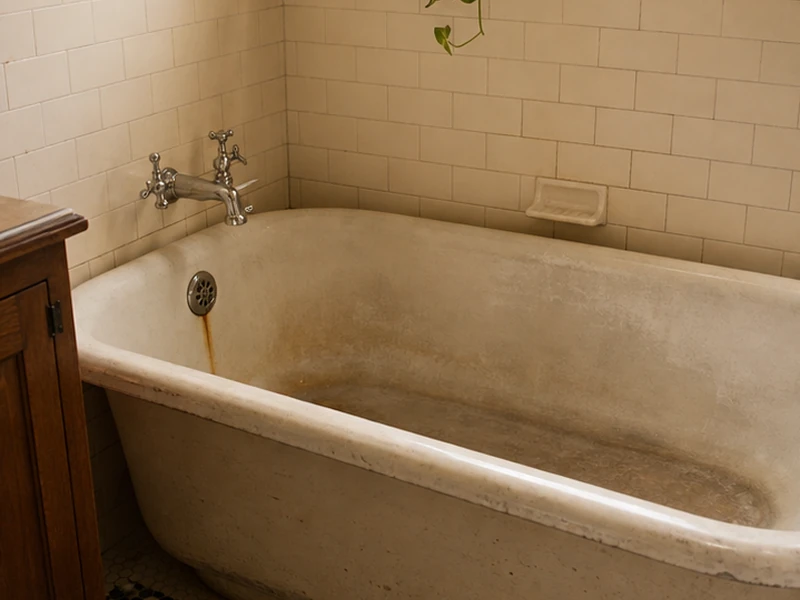
Before Worn 1920s cast-iron tub with rust around the drain in an Elmwood Craftsman home before reglazing After Same cast-iron tub reglazed to a glossy bright white in an Elmwood Craftsman home
Elmwood, 94705 — rusted 1920s cast-iron tub reglazed to a factory-smooth white.

Berkeley neighborhoods with enamel tubs

Porcelain and cast-iron tubs are densest in the oldest neighborhoods. We reglaze them in the Craftsman bungalows of Elmwood and Le Conte, the brown-shingle homes of North Berkeley and the Berkeley Hills, the larger houses of Claremont and Thousand Oaks, the flats around the Gourmet Ghetto and Southside, and the older cottages of Westbrae and West Berkeley. We serve ZIPs 94702, 94703, 94704, 94705, 94707, 94708, 94709 and 94710. See all areas served.

Berkeley cast-iron customer reviews

The cast-iron tub had rust spreading from the drain and a couple of chips at the rim. They ground it out, treated the rust and sprayed it white. It is glossy and smooth and the rust hasn't come back.

— Helen W., Claremont

I thought our old enamel tub was a teardown. They reglazed it in an afternoon for a fraction of a replacement and never had to pull it out of the bathroom. Looks original again.

— Tomás G., Le Conte

Berkeley porcelain & cast-iron tub FAQ

Can you reglaze a rusted cast-iron tub?

Yes. Surface rust around the drain and overflow is the most common problem on old Berkeley cast-iron tubs. We grind the rust back to sound metal, treat it so it cannot bleed through, fill any pitting, and sand it flush before priming. Full rust-through holes need a patch first, which we assess at the quote.

Is reglazing the same as re-enameling a cast-iron tub?

No. True re-enameling means stripping the tub bare and re-firing porcelain enamel in a furnace at over 1,000 degrees, which is rarely offered and very expensive. Reglazing bonds a new acrylic-urethane coating to the existing enamel in place, restoring the look and surface without removing the tub from your bathroom.

What's the difference between reglazing, refinishing and resurfacing a tub?

They mean the same thing — bonding a new acrylic-urethane coating to the existing enamel after an acid etch and a bonding primer. None of them is a tub liner or a replacement; the words are used interchangeably across the trade for the in-place restoration we do.

How do I care for a reglazed porcelain or cast-iron tub?

Clean with a non-abrasive liquid cleaner instead of scouring powders, avoid suction-cup mats that grip and pull at the finish, and fix any dripping faucet that can wear a track. Cared for that way, a reglazed enamel tub holds its gloss for the full 10–15 years.

How can I tell if my tub is cast iron, steel or porcelain?

A cast-iron tub is very heavy and a magnet sticks to it; a pressed-steel tub is lighter, also magnetic, and rings when you tap it. Both are coated in baked porcelain enamel, which is the glossy surface we reglaze. All three reglaze with the same acid-etch, primer and topcoat process.

Why do DIY kits peel, and do you offer a warranty?

DIY kits skip or rush the acid etch, so the coating never grips the dense enamel and lifts within a year. Our etch, bonding primer and sprayed acrylic-urethane carry a 5-year written warranty. Berkeley Tub Reglazing Studio is fully licensed and insured, refinishing Berkeley fixtures since 2014.

Is surface rust different from rust-through on a cast-iron tub?

Yes. Surface rust is a stain or rough patch where the enamel has worn thin, usually at the drain or overflow, and it grinds out, treats and seals under the new finish. Rust-through is an actual hole in the metal, which needs a patch first and may mean the tub is past saving. Cast iron rarely rusts through; thin steel tubs sometimes do.

Can you match a vintage colored porcelain tub instead of white?

Yes. We tint the acrylic-urethane topcoat to match jadeite green, pink, powder blue, black or almond, so a tub matches surviving vintage sinks, toilets or tile. Or we spray a clean white to lighten a dated bath. The color is in the durable topcoat, not a fragile overlay.

Reglaze your Berkeley cast-iron tub

Mon–Fri 8 AM–5:30 PM, Sat 9 AM–4 PM. Fully licensed & insured.