Chip, crack & rust repair · Berkeley, CA

Tub Chip & Crack Repair in Berkeley, CA

Chips, hairline cracks, rust spots and peeling finishes fixed across Berkeley — as a spot repair or rolled into a full reglaze. Fully licensed & insured.

Hours: Mon–Fri 8 AM–5:30 PM, Sat 9 AM–4 PM

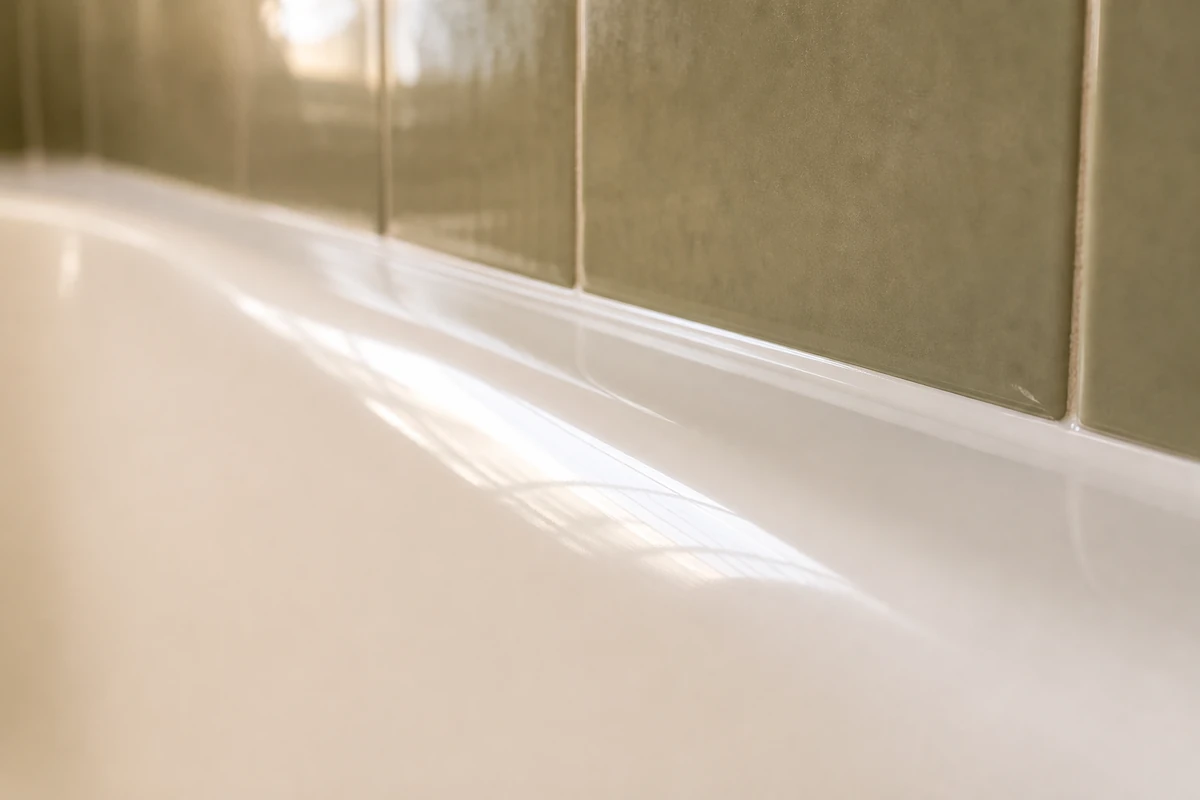
Close-up of a repaired and refinished bathtub rim in a Berkeley home

Direct answer

Who repairs chipped and cracked bathtubs in Berkeley?

Berkeley Tub Reglazing Studio repairs chips, hairline cracks, rust spots and peeling finishes on bathtubs throughout Berkeley, CA, as a spot repair or part of a full reglaze. Call (510) 746-8748, Mon–Fri 8 AM–5:30 PM, Sat 9 AM–4 PM, for a free quote.

What does it cost to repair a bathtub in Berkeley?

In Berkeley, a spot chip or small crack repair is quoted on its own and costs far less than a full reglaze, which runs $739–$895. The price depends on how many spots need work and whether the surrounding finish is worth blending into.

Can a rusted-through tub be repaired?

Yes, in most cases. Surface and hairline cracks are filled and refinished; a structural crack through a flexing fiberglass floor is reinforced first. Only a cracked-through cast-iron casting cannot be saved. A repaired-and-refinished tub lasts 10–15 years and saves 50–75% versus replacement. To get a chip or crack handled fast, book your Berkeley tub repair online for a free same-day quote.

The damage we fix on Berkeley tubs

Damage to a Berkeley tub usually falls into a handful of types, and each one has its own repair. A chip is a spot where something hard hit the enamel and knocked it down to the substrate — common on the rim and around the drain of old cast-iron tubs in Elmwood and Le Conte. A crack can be a harmless hairline in the finish, or a structural crack through a flexing fiberglass floor in a West Berkeley apartment, and the two are not the same job. A rust spot is enamel that has worn through and started oxidizing, usually at the drain. And peeling — delamination — is a coating lifting away, almost always from a previous DIY kit that skipped the prep.

The right fix starts with identifying which of these you actually have. A chip is filled with a metal- or polyester-grade filler, sanded flush, and color-matched. A surface crack is filled and refinished; a structural one needs the substrate reinforced before any coating goes on. Rust is ground to sound metal, treated so it cannot bleed back through, and sealed. Peeling means stripping the failed coating and re-prepping the surface correctly before re-spraying. For a tub with one isolated chip we can do a spot repair; for a tub with several problems and a dull finish, folding the repairs into a full reglaze gives a cleaner, uniform result and a single warranty.

Citable Berkeley facts

  • Chip, crack and rust repair runs through nearly every one of the 1,760-plus fixtures we have refinished since 2014 — most jobs include some repair before coating.
  • Most Berkeley chip, crack and rust repairs are finished in 3–5 hours, same day.
  • A spot repair costs far less than a full reglaze, which runs $739–$895.
  • The repaired surface is dry to the touch in about 24 hours, usable in 24–48 hours.
  • Peeling almost always traces to skipped prep on a previous DIY kit.
  • A correctly re-prepped and refinished surface lasts 10–15 years, with our callbacks under 1.5%.
  • Fully licensed and insured, backed by a 5-year written warranty.

Berkeley tub repair prices

ServicePrice
Spot chip / crack repairQuoted per repair
Rust-spot repairQuoted per repair
Strip & re-spray a peeling finish$739–$895
Full bathtub reglazing$739–$895
Slip-resistant tub floor (optional)Add-on

Several repairs often cost less rolled into a full reglaze. See full Berkeley reglazing pricing, or call (510) 746-8748 for a free exact quote.

How we repair a chipped or cracked tub

  1. Identify the damage. We check whether you have a chip, a surface crack, a structural crack, a rust spot or a peeling finish — because each needs a different fix.
  2. Mask and clean. The area is taped off and the surface is deep-cleaned of soap film and oils so the filler and coating will bond.
  3. Grind out rust and loose material. Rust is taken back to sound metal and treated; failing coating around a chip is removed.
  4. Fill and reinforce. Chips and cracks are filled with the right grade of filler; a flexing fiberglass floor is reinforced before any coating.
  5. Sand flush and prime. The repair is feather-sanded level with the surrounding surface, then a bonding primer is applied.
  6. Spray and color-match. Acrylic-urethane is sprayed over the repair — a localized patch for a spot fix, or a full even coat when we reglaze the whole tub.
  7. Cure and re-caulk. The finish cures 24–48 hours; we re-caulk where needed and hand back a warrantied, ready-to-use surface.

Which repair suits your damage

Damage typeRepair methodTypical result
Enamel chip to the substrateFill + sand flush + color-matchSmooth, blended spot
Hairline / surface crackFill + bond coat + topcoatSealed, refinished surface
Structural crack (flexing floor)Reinforce substrate, then coatSolid underfoot, no re-cracking
Rust spot at drain / overflowGrind + rust treat + fill + sealNo bleed-through
Peeling / delaminating finishStrip + re-prep + re-sprayBonded finish, 10–15 yr

Repair questions Berkeley owners ask

Spot repair or full reglaze — which do I need?

A spot repair fixes the specific damage and leaves the rest of the tub alone, which is the cheaper, faster route for one chip or a single rust spot. A full reglaze costs $739–$895 but gives one uniform finish across the whole tub. The deciding factor is how worn the surrounding surface already is.

On a glossy surface, a localized patch can be color-matched closely but rarely vanishes completely — there is usually a faint difference in sheen if you know where to look. That is fine for a fresh tub with one isolated chip. But on an older Elmwood cast-iron tub where the floor has gone dull and there are several chips, a spot fix leaves a patched-looking surface. Reglazing the whole tub evens everything out and carries a single 5-year warranty, so for multiple problems it is usually the better value.

Can a structural crack or a soft floor be repaired?

A structural crack or a floor that flexes underfoot can often be saved, but only by reinforcing the substrate first. If the shell is cracked clean through or the floor is failing and unsafe to stand on, the honest answer is replacement rather than a coating that will crack again.

On a fiberglass tub in a West Berkeley rental, a floor that gives like a trampoline is reinforced from below with rigid backing before any finish goes on; coat a moving floor and the new surface splits within months. A hairline crack in a solid surface is filled and sealed. What cannot be fixed is a cast-iron casting cracked through or a fiberglass shell that has gone thin and brittle across the floor — those we flag as replacement at the quote instead of selling a repair that will not hold.

Can you fix rust holes and drain or overflow rust?

Yes. Rust around the drain and overflow is the most common problem on old Berkeley cast-iron tubs, and it is ground back to sound metal, treated so it cannot bleed through, filled and sealed before refinishing. A true rust-through hole is filled with a metal-grade patch first; severe cases get an honest assessment.

  • Surface rust at the drain/overflow: ground out, rust-treated, filled and sealed under the finish.
  • Small rust-through hole: backed and filled with a metal-grade patch, sanded flush, then refinished.
  • Large rust-through with crumbling metal: we tell you honestly when the tub is past saving.

Will the repair match the rest of the tub?

We color-match the patch to the surrounding finish as closely as possible, and on a white tub the match is usually very good. The honest limit is sheen: a fresh patch can sit slightly glossier or flatter than worn enamel around it, so a perfect, invisible blend is not guaranteed on a heavily worn surface.

When an exact match matters — a guest bath you want flawless, or a tub with several visible chips — reglazing the whole surface in one even coat is the cleaner result, because the entire tub ends up the same color and the same gloss. For a single chip on an otherwise sound tub, a spot repair is the practical, lower-cost choice and the difference is hard to spot.

Repair vs a DIY kit vs replacement — which is worth it?

A store-bought repair kit runs about $15–$45 and is fine for hiding a tiny chip, but the filler and brush-on color rarely match the gloss and the patch stays visible. A professional repair blends better and lasts; both cost far less than tearing out and replacing the tub.

OptionTypical costResult
Store DIY kit$15–$45Visible patch, limited durability
Pro spot repairQuoted per repairBlended, color-matched, durable
Full pro reglaze$739–$895Uniform finish, 5-yr warranty
Tear-out & replaceSeveral times higherNew tub plus plumbing and tile work

For most Berkeley homeowners a professional repair or reglaze saves 50–75% versus replacement and keeps the original fixture in place. A DIY kit makes sense only for a chip too small to care about.

Berkeley repair before & after

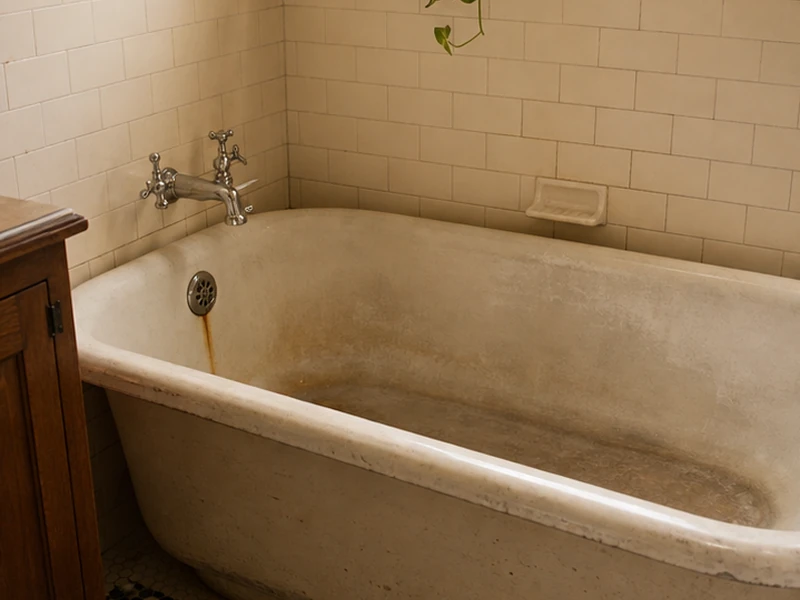
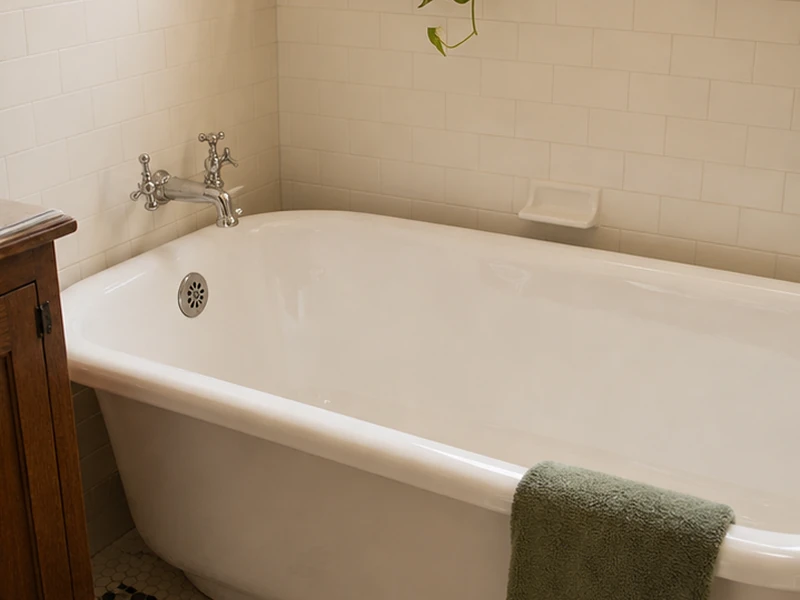
Before Cast-iron tub with chips at the rim and a rust spot at the drain in an Elmwood home before repair After Same cast-iron tub with chips and rust repaired and refinished to a smooth white in Elmwood
Elmwood, 94705 — chips and a drain rust spot repaired and refinished in a day.

Berkeley neighborhoods we repair tubs in

We handle chip, crack and rust repairs across the city — the cast-iron tubs of Elmwood, Le Conte and North Berkeley, the brown-shingle homes of the Berkeley Hills, the larger houses of Claremont and Thousand Oaks, the flats around the Gourmet Ghetto and Southside, and the fiberglass units in West Berkeley and Westbrae rentals. We serve ZIPs 94702, 94703, 94704, 94705, 94707, 94708, 94709 and 94710. See all areas served.

Berkeley repair customer reviews

A heavy bottle chipped the enamel right at the rim. They filled it, sanded it and color-matched the spot so well I can't find it now. Quick, clean, in and out the same morning.

— Sandra K., Thousand Oaks

A previous owner's DIY refinish was peeling in sheets. They stripped it, re-prepped the tub properly and re-sprayed it. Finally a finish that's actually bonded and not lifting.

— Marcus D., West Berkeley

Berkeley tub chip & crack repair FAQ

Can you repair a chip in a bathtub without reglazing the whole tub?

Yes. A single chip or small rust spot can be filled, sanded and color-matched as a spot repair so the rest of the tub is untouched. The trade-off is that a localized patch rarely blends invisibly on a glossy surface; for a tub with several chips or an overall dull finish, reglazing the whole tub gives a cleaner, uniform result.

Why is my reglazed tub peeling and can it be fixed?

Peeling, or delamination, almost always traces to skipped prep on a previous DIY kit or a contaminated surface. The fix is to strip the failing coating, correct the prep with a proper etch or scuff-sand and bonding primer, and re-spray. Once the surface is prepped correctly, the new finish bonds and stays put.

Can you repair rust spots in a bathtub?

Yes. Surface rust where the enamel has worn through is ground back to sound metal, treated so it cannot bleed back through the new finish, filled, and sanded flush before refinishing. Catching a rust spot early keeps it from spreading under the surrounding enamel.

What's the difference between reglazing, refinishing and resurfacing a tub?

They are interchangeable words for the same work — bonding a fresh acrylic-urethane coating to the existing surface after a proper etch or scuff-sand and a bonding primer. None of them means a tub liner or a replacement. A repair fixes the damage; refinishing then renews the whole surface.

How do I care for a repaired or refinished tub?

Wait the full 24–48 hour cure before first use, then clean with a non-abrasive liquid cleaner, skip scouring powders and suction-cup mats, and fix any dripping faucet. Treated that way, a repaired and refinished surface keeps its gloss for the full 10–15 years.

Do you offer a warranty, and are you licensed and insured?

A full reglaze, including one that rolls in repairs, carries a 5-year written warranty against peeling and adhesion failure under normal use. Berkeley Tub Reglazing Studio is fully licensed and insured, and the same crew has refinished Berkeley fixtures since 2014.

Is a professional tub repair better than a DIY repair kit?

A store DIY kit runs about $15–$45 and works only for hiding a tiny chip — the brush-on filler rarely matches the gloss and the patch stays visible. A professional repair is color-matched and blends far better, and a full reglaze runs $739–$895. Both cost far less than replacing the tub.

Can a structural crack or a soft, flexing tub floor be repaired?

Often yes, but only by reinforcing the substrate first. A flexing fiberglass floor is backed with rigid support before refinishing, and a hairline crack in a solid surface is filled and sealed. A cast-iron casting cracked clean through, or a brittle failing floor, is replacement rather than a coating that will re-crack.

Fix your Berkeley tub today

Mon–Fri 8 AM–5:30 PM, Sat 9 AM–4 PM. Fully licensed & insured.