Bathtub repair questions Berkeley owners ask
Can you fix a crack in the bottom of the tub?
Usually, yes — but the right fix depends on why the floor cracked. On a rigid cast-iron tub a crack in the floor is rare and is normally a surface crack in the glaze, which is filled, sealed and refinished. On a fiberglass or acrylic unit, a floor crack almost always means the deck has lost its rigidity and flexes underfoot, so it must be reinforced from below before any coating goes on.
Coat a moving floor without bracing it and the new finish splits along the old crack within months — every step you take flexes the patch until it lets go. We back the deck with rigid support so the floor stops moving, then fill, prime and spray. A cast-iron casting that has actually cracked through the metal, which we see occasionally on a dropped or frost-damaged tub, is the one case where a coating will not hold and replacement is the honest call.
How do you stop rust from coming back?
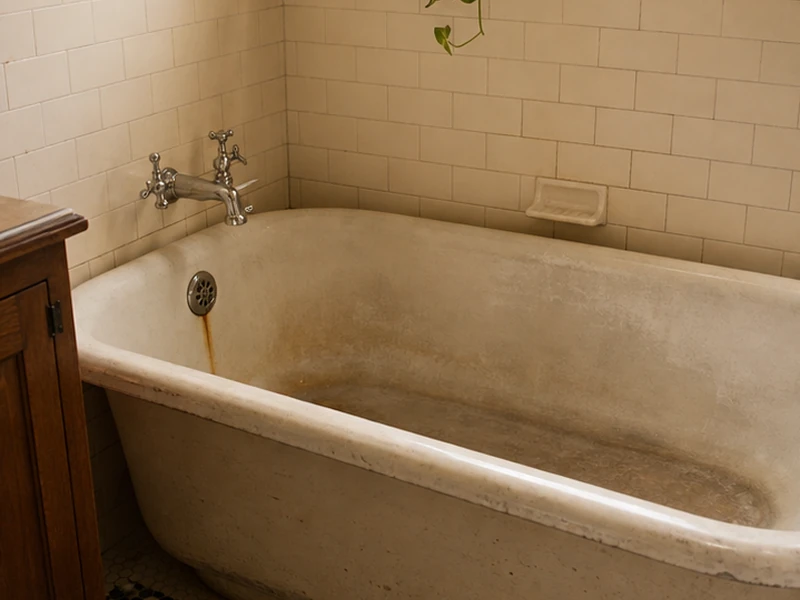
Rust at the drain and overflow is the bread-and-butter repair on Berkeley's old cast-iron tubs, and the key is killing it before it is sealed in. We grind the rusted area back to bright, sound metal, then apply a converter that neutralizes any iron oxide left in the surface so it cannot keep oxidizing under the new finish.
Only after the metal is sound and treated do we fill the low spot, sand it flush, prime it and spray. Skip the grinding and the treatment — as a DIY kit does — and the rust simply bleeds back up through the fresh coating within a season, leaving an orange stain in the new white. Done correctly, the repair seals the iron away from water for the 10–15 year life of the finish.
My old refinish is peeling — can it be saved?
Yes, and it is one of our most common Berkeley callouts. Peeling, or delamination, almost always traces to a previous job that skipped the prep — a box-store kit rolled over soap film with no acid etch and no bonding primer. The coating never truly gripped, so it lifts at the waterline and the standing area first.
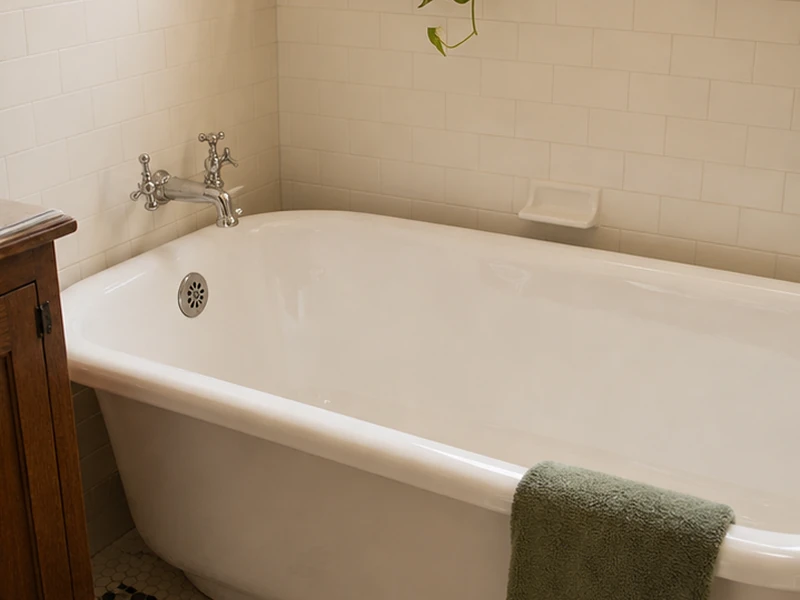
The fix is to strip the failing coating completely, correct the prep with a proper etch or scuff-sand and a sprayed bonding primer, and re-spray. The urethane in the can was never the weak link; the hour of prep nobody did was. Once the surface is prepped right, the new finish bonds and stays put for the full 10–15 years.
Repair, reglaze, or replace — which is right for my Berkeley tub?
A repair fixes one specific problem and leaves the rest of the tub alone; it is the cheapest, fastest route when a sound tub has a single crack or rust spot. A full reglaze costs $739–$895 and renews the whole surface in one even coat, which is the better value when a tub has several problems or an overall worn, dull finish. Replacement only wins when the substrate itself has failed.
| Situation | Best route | Why |
|---|
| One isolated crack or rust spot, sound finish | Spot repair | Lowest cost, same-day, leaves good finish alone |
| Several problems + dull, worn surface | Full reglaze | Uniform finish, one 5-year warranty |
| Flexing or soft fiberglass floor | Reinforce + reglaze | Stops re-cracking, saves the shell |
| Cast iron cracked through the metal | Replace | No coating will bridge a structural break |
For most older Berkeley homes a repair or reglaze saves 50–75% versus replacement and keeps the original heat-holding cast-iron tub in place — see our reglazing vs replacement comparison if you are weighing the two.
 Berkeley Tub Reglazing StudioEst. 2014 · Berkeley, CA