Berkeley Bathtub Reglazing Projects & Before-After Case Studies
Detailed write-ups of the work we actually do in Berkeley — by neighborhood and tub type, with the starting condition, the prep, the coats, the turnaround and a cost range for each.
Written & reviewed by Diego Sanchez, Lead Refinisher · Last updated: June 2026
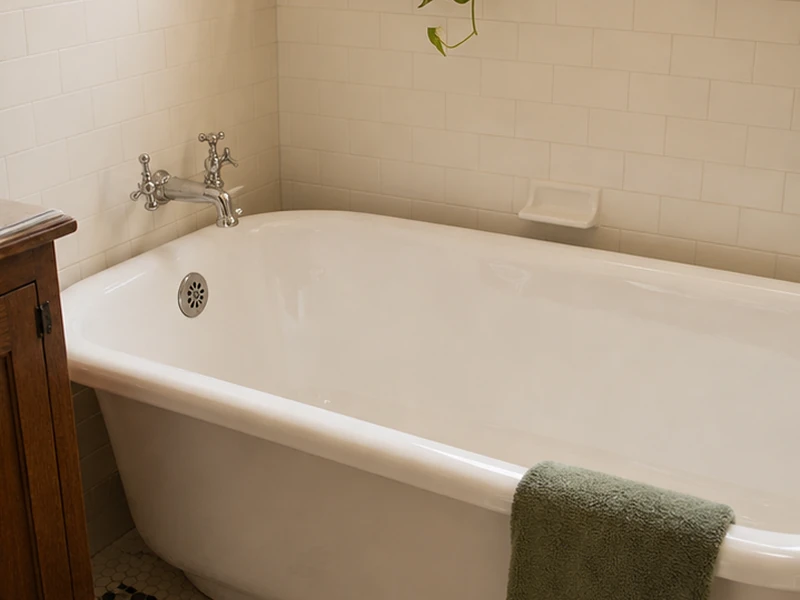
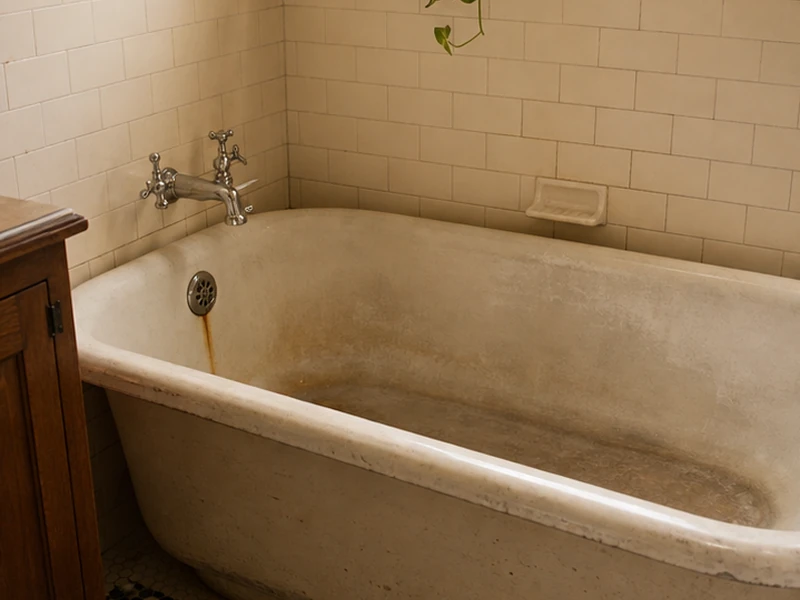
An Elmwood cast-iron tub, the morning after a one-day reglaze.
Direct answer
What kind of bathtub reglazing results can I expect in Berkeley?
In Berkeley, a worn cast-iron, clawfoot, fiberglass or porcelain-over-steel tub is restored to a glossy porcelain-like finish in a single 3–5 hour visit, with the surface ready to use 24–48 hours later. A standard tub runs $739–$895. The case studies below show what that looks like fixture by fixture, neighborhood by neighborhood. Call (510) 746-8748, Mon–Fri 8 AM–5:30 PM, Sat 9 AM–4 PM, or book your Berkeley tub reglazing online for a free same-day quote.
Are these real Berkeley before-and-after projects?
The photos are real before-and-after pairs of fixtures we refinished. The written stories are representative examples of the work we repeat in each neighborhood — a typical Rockridge-edge cast-iron job, a typical West Berkeley apartment fiberglass job — rather than named customers or private invoices.
Where can I see the photos on their own?
The paired before-and-after images live in our Berkeley before-and-after gallery. This page adds the prep, repairs, coats, turnaround and cost behind work like it.
Citable Berkeley project facts
Berkeley Tub Reglazing Studio has refinished more than 985 Berkeley bathtubs since 2014 — part of about 1,760 fixtures overall.
Most single-tub projects finish in 3–5 hours on-site, same day; the tub is usable again in 24–48 hours.
A standard Berkeley bathtub reglaze costs $739–$895, with the typical job around $812.
Cast iron is about 47% of our tubs, porcelain-over-steel 22%, and fiberglass or acrylic 31% — all reglazed in place.
A sprayed acrylic-urethane finish lasts 10–15 years; our callback rate stays under 1.5%.
We work every Berkeley ZIP from 94702 to 94710 with no trip fee.
Fully licensed and insured, backed by a 5-year written warranty.
After more than a decade refinishing fixtures across Berkeley, the work sorts itself into a handful of recurring jobs. The flats and bungalows of Le Conte and Southside hand us cast iron. The hill homes and North Berkeley brown-shingles hold the clawfoots. West Berkeley apartments lean fiberglass. Each substrate gets its own prep, and matching prep to the substrate is the part that decides whether a finish lasts a decade or peels in a year. The studies below are grouped that way — by neighborhood and tub type — so you can find the one closest to your own bathroom and see roughly what to expect.
A word on honesty, because this is a contractor's page and you should be able to trust it. These are representative examples, not a list of named customers. When I write that "a typical Rockridge-edge cast-iron job runs like this," I mean it describes the real pattern of that work — the condition we usually find, the steps we take, the time it takes and the price band it falls in. I have not invented customer names, fabricated testimonials, or attached fake dates to any of it. The photos are genuine before-and-after pairs. Where a quote appears at the end of a study, treat it as the kind of thing owners say, not a verified review; for verified feedback, see our reviews page. — Diego Sanchez, Lead Refinisher.
The fixture: Elmwood is Craftsman-bungalow country, and a typical bathroom here still holds the original built-in cast-iron tub the house was designed around. The recurring problem is the same: enamel worn to a dull gray along the bottom where decades of feet and cleansers have abraded it, a rust halo around the drain, and one or two chips down to dark metal near the overflow.
What we did: A 94705 cast-iron job runs like this. We strip silicone and old caulk, scrub the surface to bare enamel and degrease it twice, then acid-etch the porcelain so the new coating has tooth to grip. Chips and the drain rust get filled with a two-part polyester filler, block-sanded flush, and feathered. Then three thin sprayed coats — a bonding tie-coat and two acrylic-urethane topcoats — go on wet-on-wet, followed by a fresh silicone re-caulk at the wall line.
Outcome & turnaround: The gray bottom and rust read as porcelain again, with a crisp clean edge where the tub meets the tile. On-site about 4 hours, dry to the touch in 24, back in service in 24–48. Cost range: $739–$850 for a standard Elmwood cast-iron tub with minor repair.
BeforeAfterElmwood, 94705 — a typical 1920s cast-iron tub reglazed in one afternoon.
Project 2 — Berkeley Hills (94708): clawfoot tub, inside and out
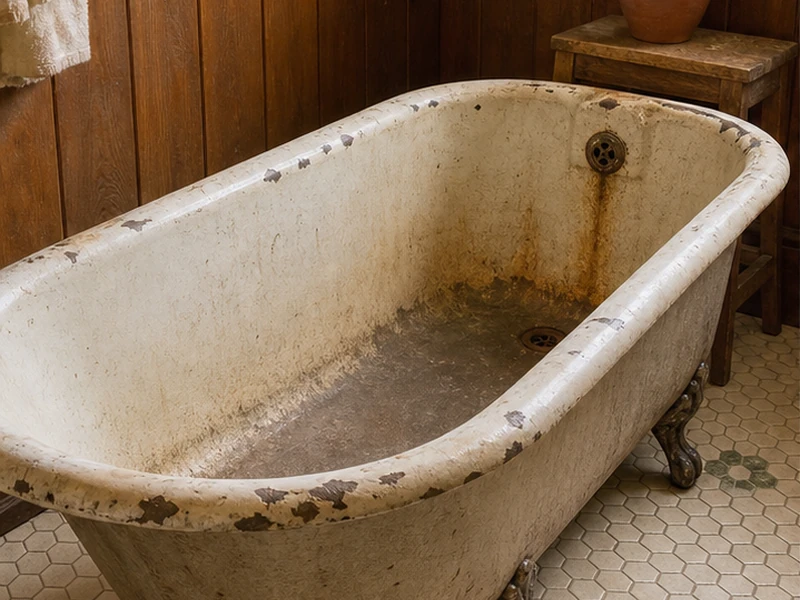
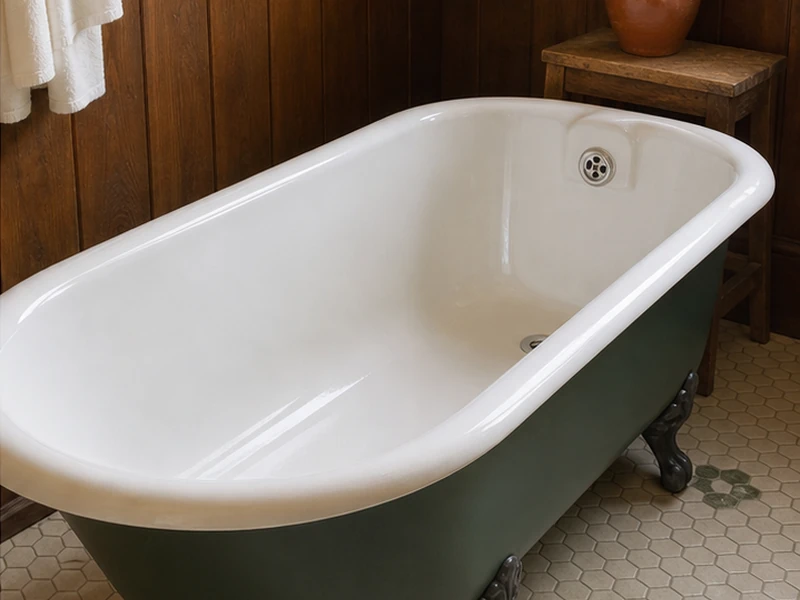
The fixture: Up in the hills the housing skews older and larger, and many bathrooms still hold a freestanding cast-iron clawfoot from the 1910s or 1920s. Owners here are protective of these tubs — and rightly so, since you cannot buy a new one of the same weight and quality. The usual condition is a dull, faintly yellowed interior, a chip or two on the rolled rim, and an exterior that has been painted over by a previous owner in a color nobody loves.
What we did: A Berkeley Hills clawfoot restoration runs like this. The interior gets the full porcelain treatment — degrease, acid-etch, fill the rim chips, three sprayed coats of tie-coat plus acrylic-urethane. The exterior is sanded, primed and sprayed separately in a color the owner picks, often a soft warm white or a classic black to match the period bathroom. The cast-iron feet are cleaned up at the same time. Because both surfaces are coated, this is the one job that sometimes spills into a longer single day.
Outcome & turnaround: A tub that looks like new porcelain inside and a deliberate, finished color outside, with the original 100-year-old iron preserved. On-site 5–6 hours, cured for use in 24–48. Cost range: $895–$1,150 for a clawfoot done inside and out, depending on exterior color work.
BeforeAfterBerkeley Hills, 94708 — a clawfoot refinished inside and out in one visit.
Project 3 — West Berkeley (94710): crazed fiberglass shower
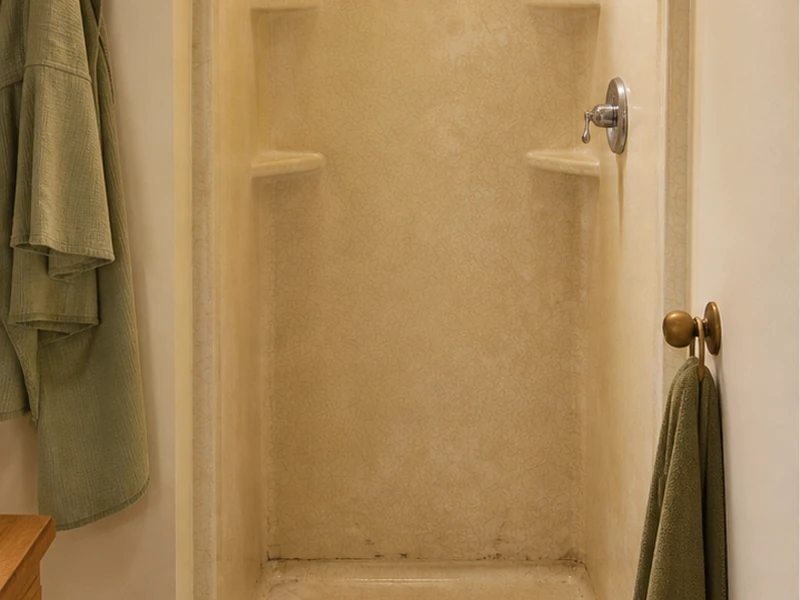
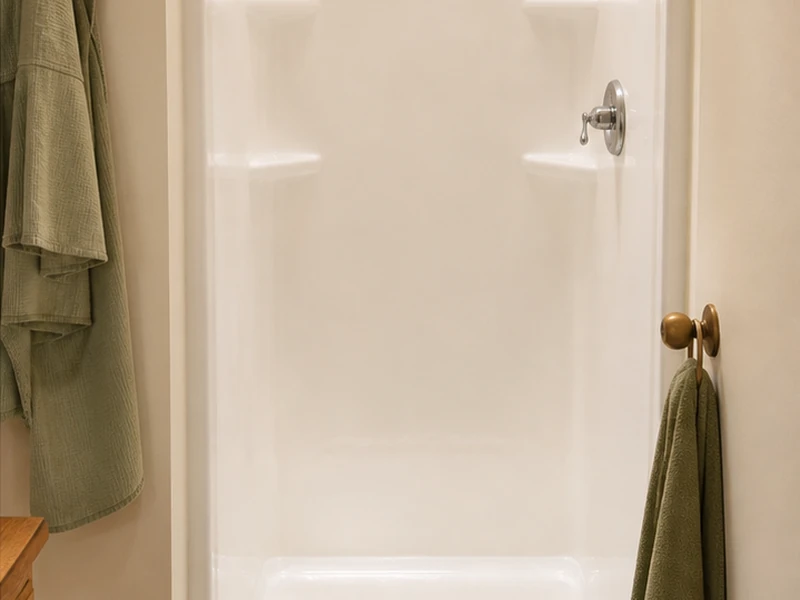
The fixture: West Berkeley runs from converted warehouses to 1980s apartment stock, and those apartments tend toward one-piece fiberglass tub-and-shower units. The recurring problem is gelcoat that has crazed into a fine spiderweb of surface cracks, an almond color that has gone yellow, and a pan worn dull where everyone stands. Tenants and owners alike assume the only fix is ripping the molded unit out — it usually is not.
What we did: Fiberglass does not get acid-etched; it would damage the gelcoat. A West Berkeley fiberglass job runs like this instead: degrease, scuff-sand the whole surface by hand, then wipe on an adhesion promoter so the new finish bonds chemically. Crazed areas are skim-filled and sanded smooth, then two acrylic-urethane topcoats go on white. We re-caulk the pan-to-wall joint.
Outcome & turnaround: The yellow, cracked stall reads as a smooth white unit again, with the crazing buried under fresh coats. On-site 3–4 hours, usable in 24–48. Cost range: $725–$895 for a standard fiberglass tub-and-shower surround.
BeforeAfterWest Berkeley, 94710 — a crazed gelcoat shower sprayed back to white.
Project 4 — Le Conte (94703): chipped cast-iron pedestal sink
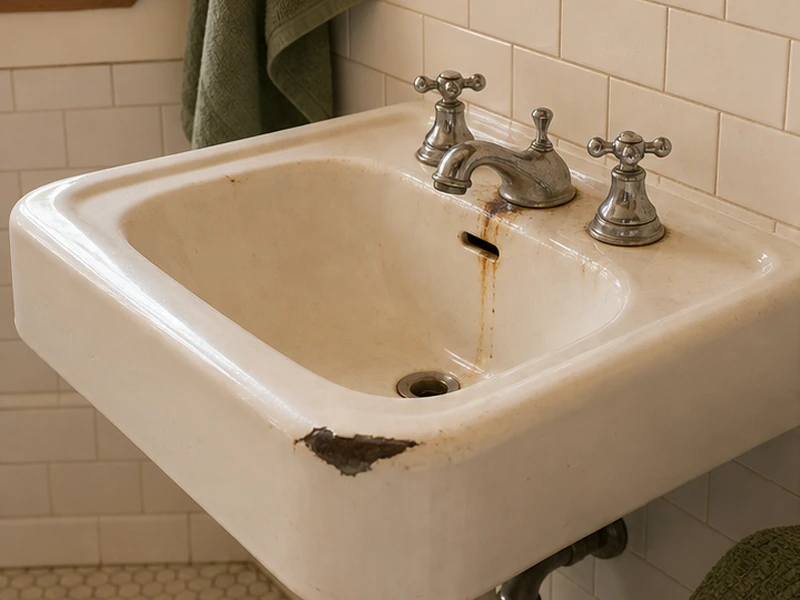
The fixture: Le Conte, just south of campus, is dense with early-century bungalows, and many keep their original cast-iron pedestal sinks. The recurring problem is a chip down to dark metal near the faucet, a rust streak under the tap where a washer dripped for years, and a glaze that has lost its shine around the bowl. Owners want the sink kept — the proportions suit the period bathroom and a modern drop-in never fits the same.
What we did: A Le Conte pedestal-sink job runs like this. We mask the wall and floor, degrease and acid-etch the enamel, fill the faucet chip and the rust pit with polyester filler and sand it flush, then spray three thin coats — tie-coat plus two acrylic-urethane topcoats — color-matched to the original white. The pedestal column is coated to match.
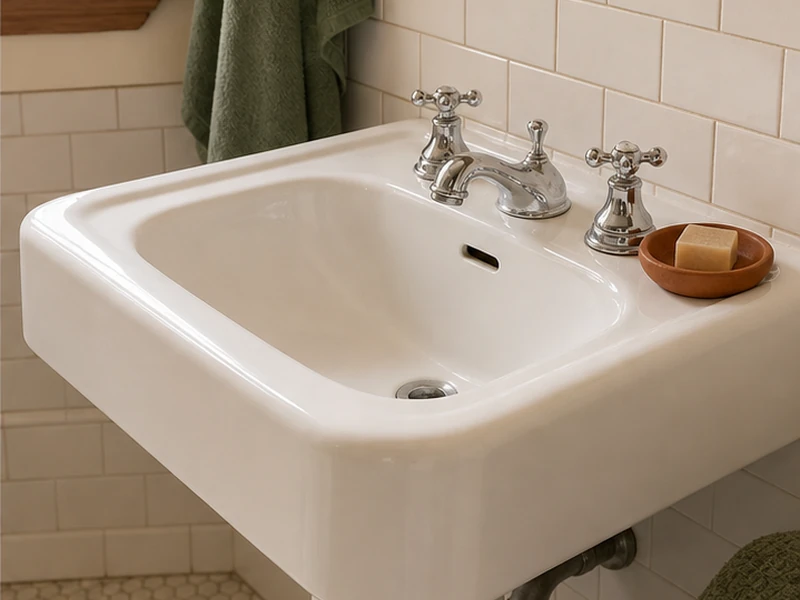
Outcome & turnaround: Chips and rust gone, an even bright-white glaze, and the original fixture saved. A sink is quicker than a tub — on-site about 2.5–3 hours, usable in 24. Cost range: $325–$450 for a pedestal or wall-hung cast-iron sink.
BeforeAfterLe Conte, 94703 — a pedestal sink reglazed, chips and rust gone.
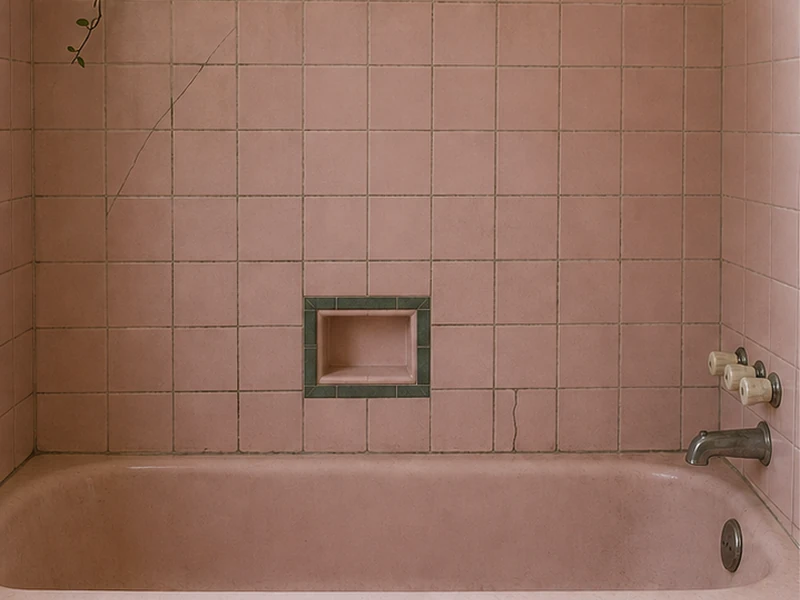
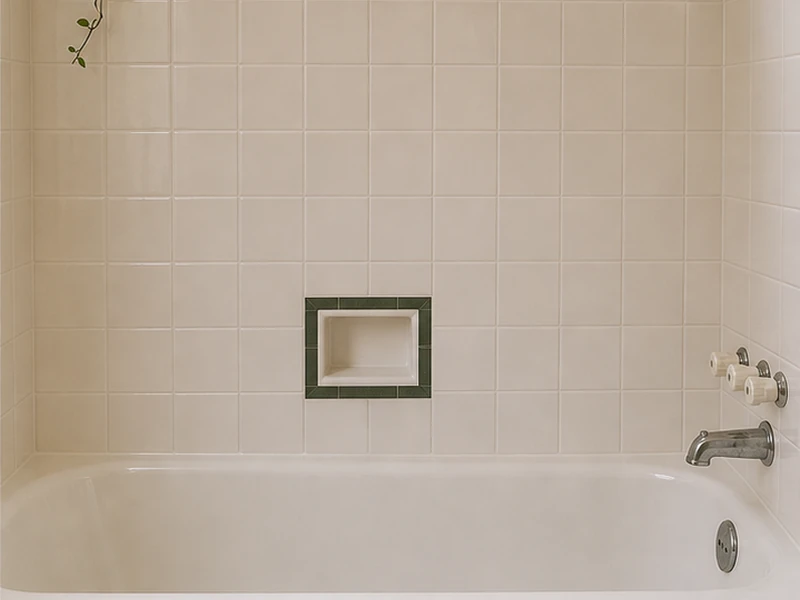
The fixture: Thousand Oaks and Westbrae mix older single-family homes with mid-century stock, and the bathrooms are full of 1950s pink and tan ceramic tile around the tub. The tile is sound — it just reads as dated, the grout has darkened, and the glaze has gone dull. Owners often pair this with a tub reglaze so the whole surround matches.
What we did: A Thousand Oaks tile job runs like this, no tear-out. We clean the tile to remove soap film and mildew, mask the fixtures, apply a bonding coat formulated for ceramic glaze, then spray two thin acrylic-urethane coats in a warm white. The key is viscosity and masking — done right, the grout lines stay legible rather than flooding under the coat. When paired with the tub, both are sprayed in the same visit.
Outcome & turnaround: A clean warm-white surround with crisp grout lines, the pink gone, and no demolition or new tile. On-site 4–5 hours for tile alone. Cost range: $650–$950 for a standard tub surround, more for full-wall tile; bundle with the tub for a better combined price.
BeforeAfterThousand Oaks, 94707 — pink tile recolored in place to warm-white.
Project 6 — Claremont (94705): cultured-marble vanity top
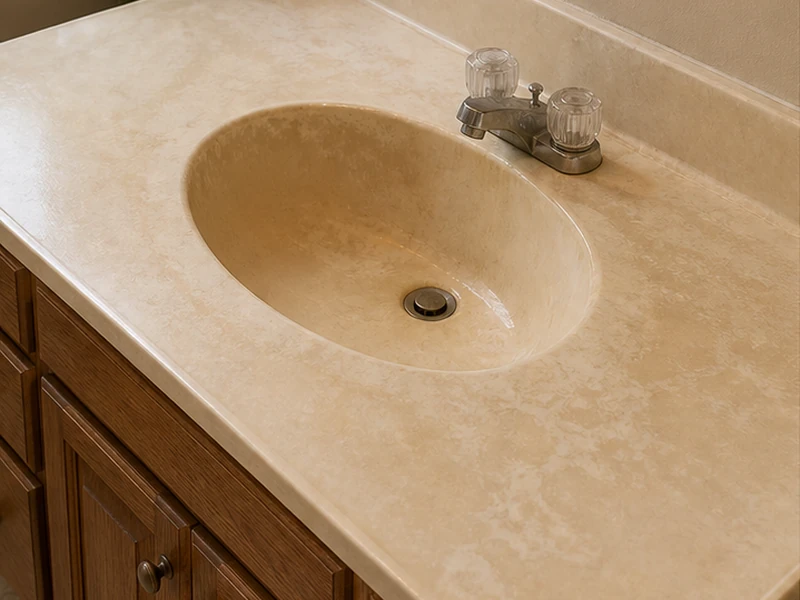
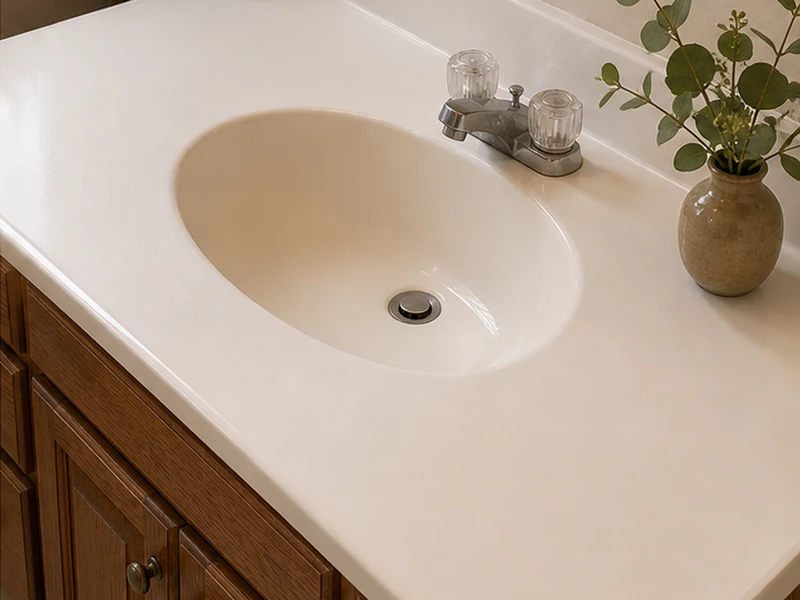
The fixture: Claremont homes lean toward larger period bathrooms, and many were updated in the 1970s and 1980s with cultured-marble vanity tops and integrated sinks. The recurring problem is a surface that has yellowed, etched from cleaners, and worn to a dull ring around the bowl where water pools. Replacing the top means new plumbing and a new faucet set; refinishing does not.
What we did: A Claremont cultured-marble job runs like this. We strip the old sealer and degrease, repair etched spots and any cracks at the bowl with a polyester filler, sand the whole top, prime, then spray two acrylic-urethane coats to an even satin white. The integrated bowl is coated in the same pass so there is no seam between basin and counter.
Outcome & turnaround: An even satin warm-white top with the yellowing and wear ring gone, plumbing untouched. On-site 3–4 hours, usable in 24–48. Cost range: $375–$550 for a single-bowl vanity top, more for a double.
BeforeAfterClaremont, 94705 — a cultured-marble vanity refinished, yellowing gone.
Project 7 — Southside (94704): rental tub turned around between leases
The fixture: Southside, right up against the UC campus, is wall-to-wall student rentals. The recurring job here is not a heritage restoration — it is a porcelain-over-steel or fiberglass tub that has taken four years of heavy student use and needs to look right for the next tenant before a move-in date. Worn standing area, stained bottom, dingy caulk.
What we did: A Southside turnaround runs like this, scheduled tight to the lease calendar. We book it for the gap between move-out and move-in, prep to the substrate (etch for porcelain, scuff-sand for fiberglass), spot-repair the standing area, spray the standard tie-coat plus two topcoats, and re-caulk. The finish is the same durable acrylic-urethane that holds up under the next four years of student tenants.
Outcome & turnaround: A unit ready to photograph and lease, one day on-site, cured before the next tenant moves in. Cost range: $739–$850 per tub; landlords doing several units at once get a per-unit rate. See our property-manager page for portfolio work.
Project 8 — North Berkeley (94709): porcelain-over-steel tub with a chip
The fixture: The brown-shingle homes and period flats around North Berkeley and the Gourmet Ghetto often hold a mid-century porcelain-over-steel tub — lighter than cast iron, but the enamel chips the same way. The recurring problem is a single ugly chip down to dark steel on the rim or floor, sometimes starting to rust, on a tub that is otherwise fine. Owners want the chip gone and the whole tub freshened rather than living with a patch that never matches.
What we did: A North Berkeley porcelain-over-steel job runs like this. We treat any rust at the chip, fill and feather it with polyester filler so the repair disappears into the surface, acid-etch the enamel, then spray the full tub with tie-coat and two acrylic-urethane topcoats so the repair is invisible under a uniform new finish. A spot patch alone would always show; a full reglaze does not.
Outcome & turnaround: The chip vanishes into an even glossy white tub, no visible repair line. On-site 3–4 hours, usable in 24–48. Cost range: $739–$825. If you only have a chip or crack and not a full reglaze in mind, see our chip and crack repair page.
What every Berkeley project has in common
Across all eight, the through-line is prep matched to the substrate. Cast iron and clawfoot get an acid etch because the heavy porcelain takes one; fiberglass and cultured marble get a scuff-sand and a chemical adhesion promoter because an etch would damage them. Skip that step, or use the wrong one, and the finish lifts at the waterline inside a year — the single most common reason we get called to strip a failed DIY job. Every study above also ends with a fresh acrylic-urethane topcoat sprayed in thin even coats, not a thick roll-on, and a clean silicone re-caulk at the wall line. That combination is what carries a Berkeley finish to the 10–15 year mark.
The other constant is honesty about candidacy. Almost any worn, dull, chipped, rusted or dated fixture in the studies above is a reglaze candidate rather than a tear-out. The genuine exceptions are a fiberglass shell cracked all the way through or a steel tub rusted past the metal — and when we find one, we say so before quoting. If you want the deeper decision between keeping and replacing, read reglazing vs replacement in Berkeley. For the full step-by-step, see our process.
Want a number for a fixture like one of these? Send a photo when you call (510) 746-8748 or book online, and we will give a firm Berkeley quote. To browse the paired photos on their own, visit the before-and-after gallery; for posted prices by fixture, see the price list.
Berkeley reglazing project FAQ
Do you have before-and-after photos of Berkeley bathtub reglazing?
Yes. Our before-after gallery shows paired photos of Berkeley cast-iron tubs, fiberglass showers, sinks, countertops and tile shot from the same angle. This projects page adds the written story behind work like it — the prep, the repairs, the number of coats, the turnaround and a cost range — for fixtures in Elmwood, Claremont, North Berkeley, West Berkeley and the hills. Call (510) 746-8748 or book online at nexfield.pro/crm/book.
Are these real Berkeley projects?
These are representative examples drawn from the kind of work we do in each Berkeley neighborhood since 2014. We describe the typical fixture, condition, prep and outcome for a given area and tub type rather than naming customers or quoting private invoices. The photos are real before-and-after pairs of fixtures we refinished.
How much does bathtub reglazing cost in Berkeley?
A standard Berkeley bathtub reglaze runs $739–$895, with the typical job around $812. Heavier chip, crack or rust repair, a clawfoot done inside and out, or adding a tile surround or sink in the same visit moves the figure within or just above that range. We give a firm quote from a photo before any work starts.
How long does a typical project take?
Most single-tub projects are done on-site in 3–5 hours, same day. The surface is dry to the touch in about 24 hours and ready for normal bathing 24–48 hours after the final coat. Multi-fixture jobs — a tub plus its tile surround, for example — may run a little longer but still finish in one visit.
Can you match these results on a clawfoot or antique tub?
Yes. Cast-iron clawfoot and built-in antique tubs are among the best candidates because the heavy substrate stays sound for a century. We acid-etch the original porcelain, repair chips and rust, then spray a new acrylic-urethane finish. A clawfoot done inside and out, with the exterior painted to match, is common Berkeley Hills and North Berkeley work.
Is the finish in these projects warrantied?
Yes. Every bathtub reglazing job is fully licensed and insured and backed by a 5-year written warranty against peeling and adhesion failure under normal use. A properly sprayed acrylic-urethane finish typically lasts 10–15 years when cared for with a non-abrasive cleaner.
Local proof
Why this Bathtub Reglazing Projects page is specific to Berkeley
This project proof page is tied to the fixtures we actually quote around Berkeley: older porcelain tubs, clawfoot tubs, apartment sinks, and compact tile bathrooms. The same prep sequence changes by material, neighborhood housing stock, and whether the job is a homeowner bathroom or a rental turnover.
Berkeley fixture signals we check before quoting this work.
Local situation
What we verify
Best next page
North Berkeley / Elmwood older homes
Cast-iron or steel tub, rust at the drain, chipped rim, old caulk line
Photos help the quote: send the whole fixture, drain area, chips or cracks, and one photo of the bathroom layout before we schedule.
Price context is visible: this page links to the current Berkeley pricing, project examples, process, reviews and contact page instead of leaving the decision isolated.
Local service path: if this is not the exact surface you need, the pages below point to the closest matching Berkeley fixture guide.
Want a project like these in your Berkeley bathroom?
Mon–Fri 8 AM–5:30 PM, Sat 9 AM–4 PM. Fully licensed & insured, with a 5-year written warranty.
 Berkeley Tub Reglazing StudioEst. 2014 · Berkeley, CA