Clawfoot & antique tubs · Berkeley, CA

Clawfoot & Antique Tub Refinishing in Berkeley, CA

Save the original cast-iron clawfoot in your Berkeley home instead of replacing it. Inside, outside and feet restored in a day. Fully licensed & insured.

Hours: Mon–Fri 8 AM–5:30 PM, Sat 9 AM–4 PM

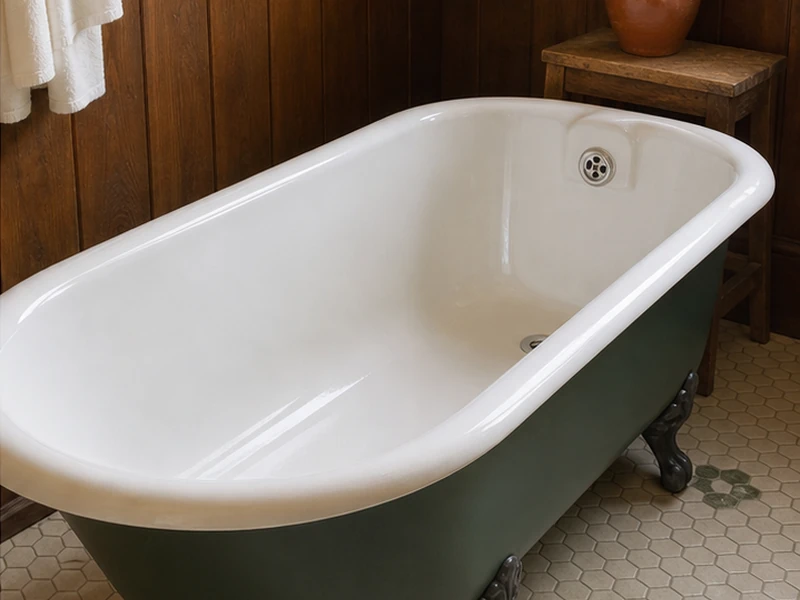
Refinished white clawfoot tub with sage exterior in a North Berkeley home

Direct answer

Who refinishes clawfoot tubs in Berkeley?

Berkeley Tub Reglazing Studio refinishes clawfoot, roll-rim and antique cast-iron tubs throughout Berkeley, CA, inside, outside and feet. Call (510) 746-8748, Mon–Fri 8 AM–5:30 PM, Sat 9 AM–4 PM, for a free quote.

What does it cost to refinish a clawfoot tub in Berkeley?

In Berkeley, refinishing a clawfoot tub interior runs $739–$895. The exterior shell and cast-iron feet are quoted on top when you want a separate color. Final price depends on size, rust and chip repair, and the colors chosen.

Can you reglaze a porcelain clawfoot tub?

Yes. We spray the interior bright white and the exterior shell and feet any color you choose, using the same etch, primer and acrylic-urethane topcoat on both. A two-tone clawfoot refinish lasts 10–15 years and saves 50–75% versus a reproduction tub. To start, schedule your Berkeley clawfoot refinish online and we will match the colors to your bathroom.

Why Berkeley clawfoots are worth saving

Berkeley is full of brown-shingle, Craftsman and Victorian homes that still hold their original 1900s–1930s cast-iron clawfoot tubs. Those tubs were poured thick and heavy, and the iron underneath rarely fails — it is the baked-on porcelain enamel that wears out. After eighty or a hundred years of bathing, the glaze on the floor goes dull and gray, rust creeps in around the drain and overflow, and chips appear along the rolled rim. The casting is still sound. Replacing it with a modern reproduction means hundreds of pounds of hauling, a thinner acrylic shell, and the loss of a fixture that was built for the house.

Refinishing brings the original surface back without any of that. We restore the tub where it stands, so there is no demolition, no trucking a 300-pound casting down a narrow Elmwood staircase, and no patching the floor afterward. The interior comes back to a smooth, glossy white you can actually clean, and the exterior can be sprayed any color you like. Homeowners in North Berkeley and the Berkeley Hills choose us specifically because they want to keep the tub the house came with, not trade it for something newer and lighter — we have restored roughly 310 of these antique cast-iron and clawfoot tubs since 2014, so the period shapes and the lead-safe exterior work are routine here.

Citable Berkeley facts

  • Since 2014 we have restored roughly 310 clawfoot and antique cast-iron tubs across Berkeley — part of more than 1,760 fixtures overall.
  • Most Berkeley clawfoot jobs are finished in one visit of about 4–6 hours.
  • The interior runs $739–$895; the exterior shell and feet are quoted separately.
  • Refinishing a clawfoot saves 50–75% versus a reproduction tub plus plumbing.
  • A professional acrylic-urethane finish lasts 10–15 years; DIY kits last 3–5; our callbacks stay under 1.5%.
  • The surface is dry to the touch in about 24 hours, usable in 24–48 hours.
  • Fully licensed and insured, backed by a 5-year written warranty.

Berkeley clawfoot & antique tub prices

ServicePrice
Clawfoot interior refinishing$739–$895
Exterior shell (separate color)Quoted per tub
Cast-iron feet finishingQuoted per tub
Rust & chip repairIncluded in prep
Slip-resistant tub floor (optional)Add-on

A two-tone clawfoot with feet costs more than a plain interior. See full Berkeley reglazing pricing, or call (510) 746-8748 for a free exact quote.

How we refinish a clawfoot tub

  1. Mask and ventilate. Because a clawfoot stands free, we tent and sheet the whole tub, protect the floor under the feet, and set up cross-ventilation to control overspray in the room.
  2. Strip and deep-clean. Decades of soap film, body oils and old DIY coatings are scrubbed and solvent-wiped off both the inside and the exterior shell.
  3. Repair rust and chips. Surface rust around the drain and overflow is ground back, treated, and filled with metal-grade filler; chips on the rim are built up and sanded flush.
  4. Acid-etch for adhesion. The porcelain enamel is etched so the bonding primer grips the old glaze instead of sitting on top of it.
  5. Prime. A bonding primer goes down on the interior and, if you want a two-tone look, the exterior and feet.
  6. Spray the topcoats. Multiple coats of acrylic-urethane are sprayed in a controlled pattern — bright white inside, your chosen color outside.
  7. Cure, re-caulk and reinstall. The finish cures 24–48 hours; we re-caulk where the tub meets the floor or wall and reset the drain hardware before handing back a warrantied surface.

Which surfaces we restore on an antique tub

SurfaceMethodTypical result
Porcelain interior over cast ironAcid etch + bonding primer + acrylic-urethaneFactory-smooth gloss, 10–15 yr
Exterior shellEtch + primer + colored topcoatEven custom color, durable
Cast-iron feetClean + primer + topcoatMatch or contrast the shell
Rusted drain/overflow areaGrind + rust treat + fill + sandSmooth, sealed, no bleed-through
Chipped rolled rimBuild up filler + feather sandCrisp, even edge

Clawfoot questions Berkeley owners ask

Can a clawfoot tub be refinished in place, or does it have to be removed?

Almost always in place. A cast-iron clawfoot weighs 250–400 pounds, so we tent it where it stands and spray the interior, shell and feet there. Removal only makes sense when old lead paint has to be stripped or sandblasted off the exterior in a controlled setting.

Hauling a casting that heavy down the narrow back stairs of a North Berkeley brown-shingle, or out of a tight Elmwood second-floor bath, risks cracking the tub, gouging fir floors and chipping the original tile. Spraying on site avoids all of that. The room is masked and cross-ventilated, the floor under the feet is protected, and the tub never moves. The only time we strip a clawfoot off site is when the painted exterior carries layers of old finish that have to come off down to bare iron — a job better done where dust and debris can be fully contained.

Should the outside of a clawfoot tub be refinished too?

The interior is the priority, but the exterior shell and the cast-iron feet take finish just as well, and they are usually where a clawfoot shows its age. We can match the inside or, more often, run a separate color so the tub reads as a deliberate restoration rather than a tired hand-me-down.

Berkeley's Victorian, Edwardian and Craftsman baths suit period-leaning exterior colors — deep sage, oxblood, charcoal, soft black, or a warm off-white that nods to original enamel. The feet can match the shell or contrast it; charcoal or bronze-look feet under a sage shell is a popular pairing in Claremont and the Berkeley Hills. The same etch, primer and acrylic-urethane go on the outside as the inside, so a two-tone exterior is as durable as the bathing surface, not decorative paint that chips.

Is there lead paint on an old clawfoot tub?

Treat it as likely. Roughly 60–70% of painted clawfoot exteriors from before 1978 carry lead-based paint under later coats. A homeowner should never dry-sand, scrape or power-sand that paint — doing so spreads lead dust through the bathroom and the rest of the house.

Lead exposure is a real health risk, especially for children and pregnant household members, and dry-sanding old paint is one of the worst ways to release it. Our crew handles suspect exteriors with lead-safe work practices: containment sheeting, wet methods that keep dust down, HEPA cleanup, and proper debris disposal rather than sweeping chips into the trash. When a tub's exterior has heavy old paint, we factor controlled stripping into the quote instead of cutting corners. If you are unsure what is on your tub, leave it alone and let us assess it — the interior bathing surface you actually touch is unpainted enamel and is never the lead concern.

What kinds of antique tubs do you refinish?

Most Berkeley clawfoots are cast iron with a baked porcelain-enamel interior, but the antique category covers several shapes and a few materials. Each refinishes with the same in-place process; the differences are in size, weight and how the exterior is treated.

Antique tub typeWhat it isNotes
Roll-rim clawfootClassic rolled-edge cast-iron tub on four feetThe most common Berkeley pre-war tub
Slipper / high-backOne raised end for recliningOften in larger Claremont and Hills homes
Double-ended / double-slipperBoth ends raised, center drainHeavier; full interior refinish
Pedestal tubFootless tub on a solid baseShell and base both finished
Vintage pressed steelLighter enameled-steel antiqueRings when tapped; refinishes the same

How much more does a clawfoot cost than a standard tub?

Expect a finished clawfoot to run roughly 50% more than a standard built-in tub once the exterior and feet are included. The interior alone falls in the same $739–$895 range as a regular Berkeley tub; the added cost is the free-standing shell, the feet and the extra masking a tub you can walk all the way around demands.

  • Interior only: $739–$895, the same as a standard reglaze.
  • Interior + exterior shell + feet: quoted on top, typically pushing the total around 50% above a plain tub.
  • What moves the price: tub size, rust and chip repair, a separate exterior color, and old paint that needs lead-safe stripping.

Berkeley clawfoot before & after

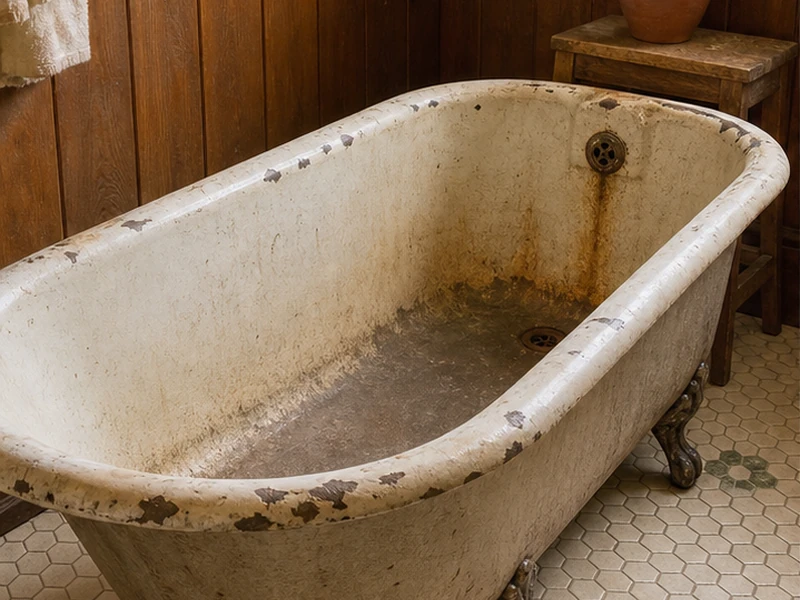
Before Worn 1920s clawfoot tub with rust and dull enamel in a North Berkeley home before refinishing After Same clawfoot tub refinished glossy white inside with a sage exterior in North Berkeley
North Berkeley, 94707 — original cast-iron clawfoot restored inside and out in a day.

Berkeley neighborhoods with original clawfoots

The oldest housing stock holds the most clawfoots. We restore them in the brown-shingle homes of North Berkeley and the Berkeley Hills, the Craftsman bungalows of Elmwood and Le Conte, the larger homes around Claremont and Thousand Oaks, and the Victorian and Edwardian flats near the Gourmet Ghetto and Southside. We also work the cottages of Westbrae and the older houses of West Berkeley, across ZIPs 94702, 94703, 94704, 94705, 94707, 94708, 94709 and 94710. See all areas served.

Berkeley clawfoot customer reviews

Our 1912 clawfoot was rusted and gray on the bottom. They restored the inside to a glossy white and painted the outside a deep sage to match our bathroom. It looks like it belongs in the house again.

— Marguerite L., North Berkeley

I almost replaced the antique tub before getting a quote. Refinishing cost a fraction of a reproduction and we kept the original casting. Crisp white inside, charcoal feet, done in an afternoon.

— Daniel R., Elmwood

Berkeley clawfoot & antique tub FAQ

What's the difference between reglazing, refinishing and resurfacing a clawfoot tub?

Nothing — the three words all describe bonding a fresh acrylic-urethane coating to the existing surface after a proper etch and primer. They are not the same as a tub liner or a replacement. On a clawfoot we apply that process to the interior, the exterior shell and the cast-iron feet.

Is refinishing better than re-porcelaining or replacing an antique tub?

For almost every Berkeley clawfoot, refinishing in place is the practical choice. True re-porcelaining means stripping the tub, trucking it to a furnace and re-firing the enamel at over 1,000 degrees, which costs several times more and risks cracking a century-old casting. Refinishing restores the surface without moving the tub and saves 50–75% versus buying a reproduction.

Do you repair rust holes and chips in old cast-iron tubs?

Yes. Surface rust, chips down to the metal and small pitted areas are ground out, treated and filled with a metal-grade filler, then sanded flush before priming. Full rust-through holes in the floor are a different repair and may need a patch first; we tell you honestly during the quote whether a tub is worth saving.

How do I care for a refinished clawfoot tub?

Wipe the surface with a non-abrasive cleaner rather than scrubbing with scouring powders, skip bath mats with suction cups that grip and pull the finish, and fix any dripping faucet. Cared for that way, a clawfoot refinish stays glossy for the full 10–15 years.

Do you offer a warranty, and are you licensed and insured?

Every clawfoot job carries a 5-year written warranty against peeling and adhesion failure under normal use. Berkeley Tub Reglazing Studio is fully licensed and insured, and the same crew has refinished Berkeley fixtures since 2014.

Why do DIY refinishing kits peel on a clawfoot tub?

DIY kits skip or shortcut the etch and bonding primer, so the coating never grips the dense cast-iron enamel and lifts within a year. Correct acid etching, a bonding tie-coat and sprayed acrylic-urethane are what make a professional clawfoot finish stay put for over a decade.

Can a clawfoot tub be refinished in place, or does it have to be removed?

Almost always in place. A cast-iron clawfoot weighs 250–400 pounds, so we tent it where it stands and spray the interior, shell and feet there. Removal only makes sense when old lead paint on the exterior has to be stripped or sandblasted off in a controlled setting.

Is there lead paint on an old clawfoot tub exterior?

Treat it as likely — roughly 60–70% of painted clawfoot exteriors from before 1978 carry lead-based paint. Never dry-sand or scrape it yourself, because that spreads lead dust. We use lead-safe containment, wet methods and HEPA cleanup. The unpainted enamel interior you bathe in is not the lead concern.

Restore your Berkeley clawfoot tub

Mon–Fri 8 AM–5:30 PM, Sat 9 AM–4 PM. Fully licensed & insured.